
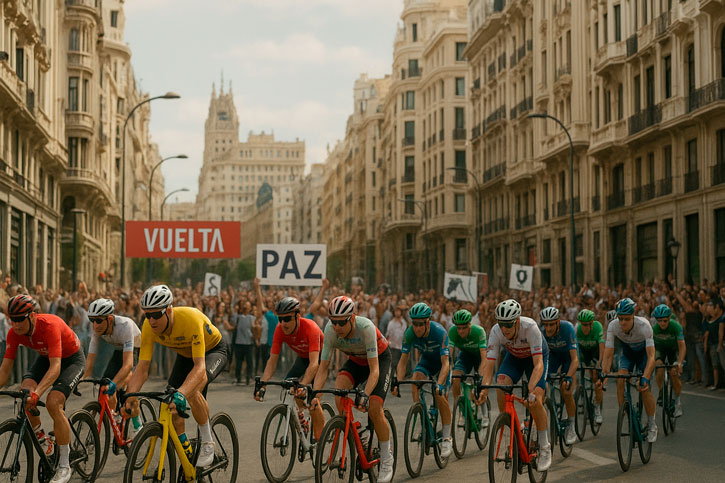
The Vuelta a España, one of cycling’s three Grand Tours, is always a highlight of the sporting calendar in Spain. Each September, the race captures international attention as elite riders tackle some of the toughest climbs in Europe, with the grand finale traditionally unfolding in Madrid.
In 2025, however, the event made headlines not just for the thrilling competition on the road, but also for the wave of pro-Palestinian protests that accompanied several stages of the race.
While the demonstrations remained largely peaceful, their visibility throughout the Vuelta added an unusual layer to this year’s edition. For visitors, especially those who came to Madrid for the final stage, the protests were part of a broader picture of civic expression in Spain’s capital and across the race’s route.
Protests Throughout the Race
Although the spotlight fell on the Madrid finale, where demonstrators briefly interrupted the race, protests were not limited to the last stage. From early in the Vuelta, activists organized sit-ins and banner displays along routes.
The actions included:
- Banner drops and flag displays on bridges and roadside sections of key stages.
- Brief interruptions where groups entered the road, forcing neutralized restarts or short delays.
- Chants and symbolic gestures from crowds gathered in town squares as the peloton passed.
Cycling races are unique in their accessibility—fans can stand directly on the roadside—so it is not uncommon for political or social movements to use these events to gain visibility. The 2025 Vuelta was no exception, though the frequency of demonstrations this year was notably higher than in previous editions.
Impact on the Riders and the Race
For the cyclists themselves, the protests were more of a distraction than a direct danger. The race organizers and local police forces responded quickly to ensure safety, clearing the roads when necessary and minimizing delays.
In Madrid, the final stage saw a short interruption as protesters entered the course. Security acted swiftly, and the peloton was neutralized until conditions were safe to resume. The incident was widely covered in the media, highlighting the global visibility of both the race and the demonstrations.
Despite these interruptions, the sporting integrity of the Vuelta remained intact. The winners were crowned as planned, and the festive spirit of the final circuit carried on, with thousands of fans—locals and international visitors alike—cheering from the sidelines.
The Tourist Experience: Navigating Protests and Festivities
For many tourists, being in Madrid during the final stage of the Vuelta is a once-in-a-lifetime experience. Streets are closed to traffic, major avenues turn into a giant cycling arena, and the city buzzes with excitement.
But this year’s edition reminded visitors of a reality common in major European cities: protests and public demonstrations can happen at any time, often alongside cultural or sporting events.
Here are a few key takeaways for travelers:
1. Expect Street Closures and Crowds
Even without protests, the Vuelta’s finale brings widespread traffic restrictions in Madrid. Add demonstrations to the mix, and visitors may encounter detours or security checkpoints. Planning ahead is essential—public transportation is usually the best way to move around.
2. Safety Comes First
Spanish authorities are experienced at managing large crowds and protests. Tourists rarely face risks, but it’s wise to stay alert, follow instructions from police, and avoid pushing into crowded demonstrations.
3. Embrace the Atmosphere
While protests may dominate the headlines, the overall vibe of the Vuelta in Madrid remains festive. Visitors still enjoyed concerts, fan zones, and the unique spectacle of watching the world’s best cyclists sprint through the heart of the city.
4. A Glimpse of Civic Life
For international visitors, witnessing a protest in Spain can also offer cultural insight. Demonstrations are a common form of civic participation, and seeing how they unfold peacefully can add a different dimension to a tourist’s experience of Madrid.
Looking Ahead
Major European capitals are living, breathing spaces where international issues often intersect with local life. Far from diminishing the experience, this adds authenticity to a trip.
Whether you come for the cycling, the tapas, or the museums, being in Madrid during the Vuelta means immersing yourself not only in sport but also in the real, unfiltered rhythm of the city.